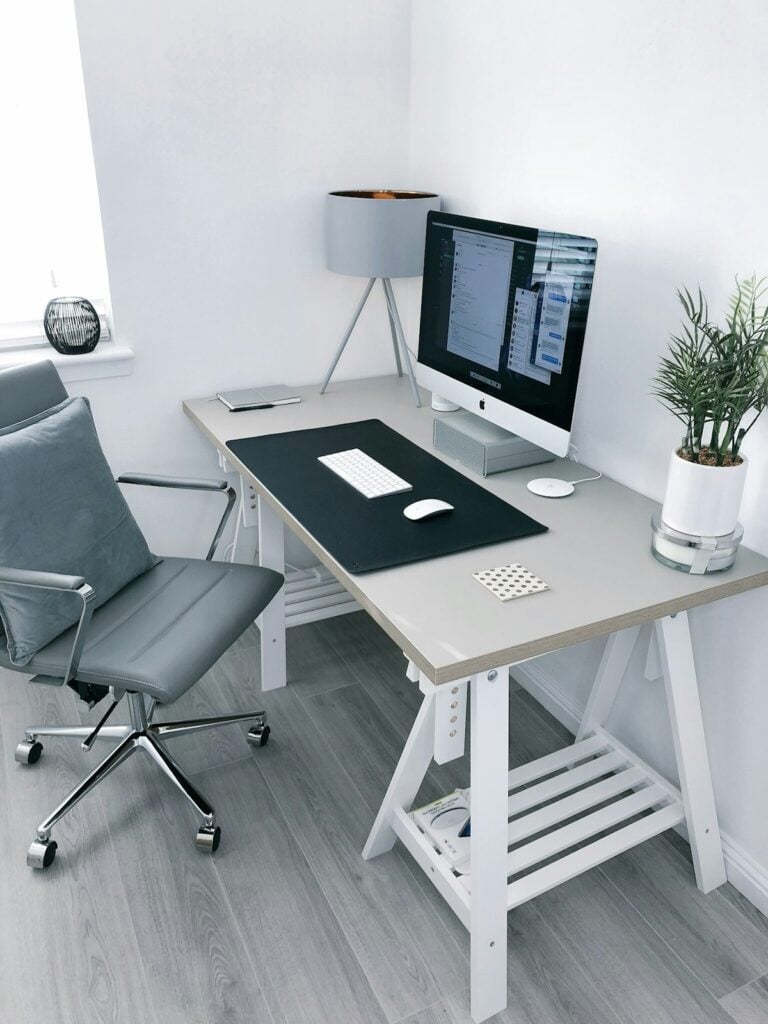
When your living room, bedroom, and office coexist within 600 square feet, visual clutter quickly translates into mental exhaustion. Creating a dedicated workspace requires smart boundaries and multi-functional furniture.
Here is how to optimize awkward alcoves and small spaces into focused work stations that blend seamlessly into your home decor when the workday ends.
Defining Visual Boundaries
Without physical walls, visual delineation establishes the psychological boundary between work and rest.
- Desk Orientation: Facing a window or wall rather than the center of your living space reduces visual distractions.
- Under-Desk Cable Baskets: Hanging wire raceways beneath the desk keeps all power bricks and surge protectors completely invisible.
- Vertical Storage Pegboards: Utilizing wall-mounted pegboards keeps peripherals, headphones, and notebooks off the limited desk surface.
End-of-Day Shutdown Ritual
In a small apartment, you cannot simply close an office door. Closing your laptop, docking your keyboard, and switching off task lighting signals to your mind that the workday is officially over.